ISLAND ACTIVITIES
Manta rays, mangroves, surf, and the cliff jumps of Ceningan — a guide to the best things to do across Nusa Lembongan and Nusa Ceningan.

NUSA LEMBONGAN
GETTING AROUND
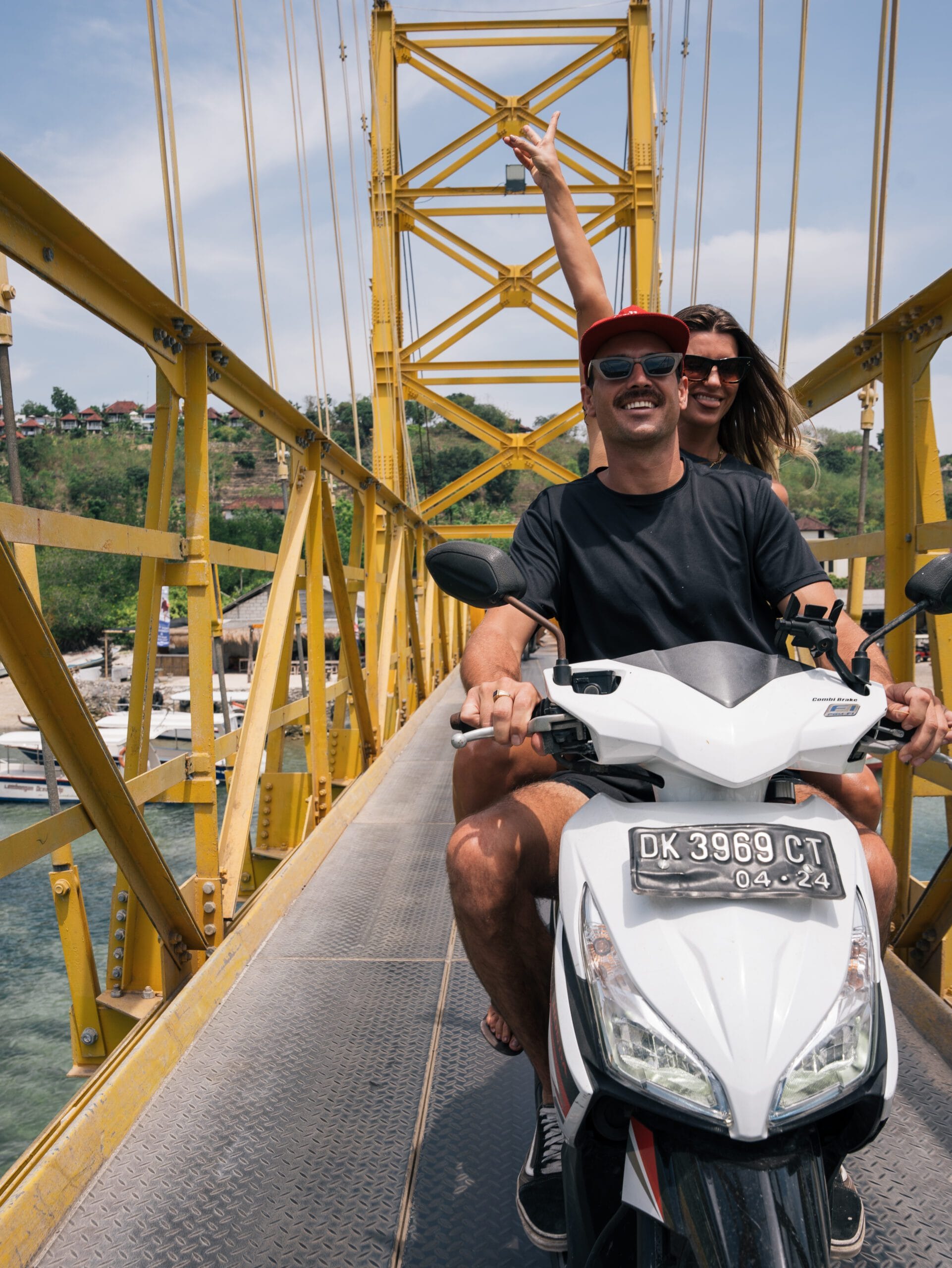
A scooter, mostly. The roads are narrow and the traffic is nothing like Bali. Everything on Lembongan is fifteen minutes from everything else, and Ceningan is a bridge away. Boats run to the snorkel sites and surf breaks from the beaches. We handle transfers and bookings for guests — ask the team and it’s sorted.
IN THE WATER
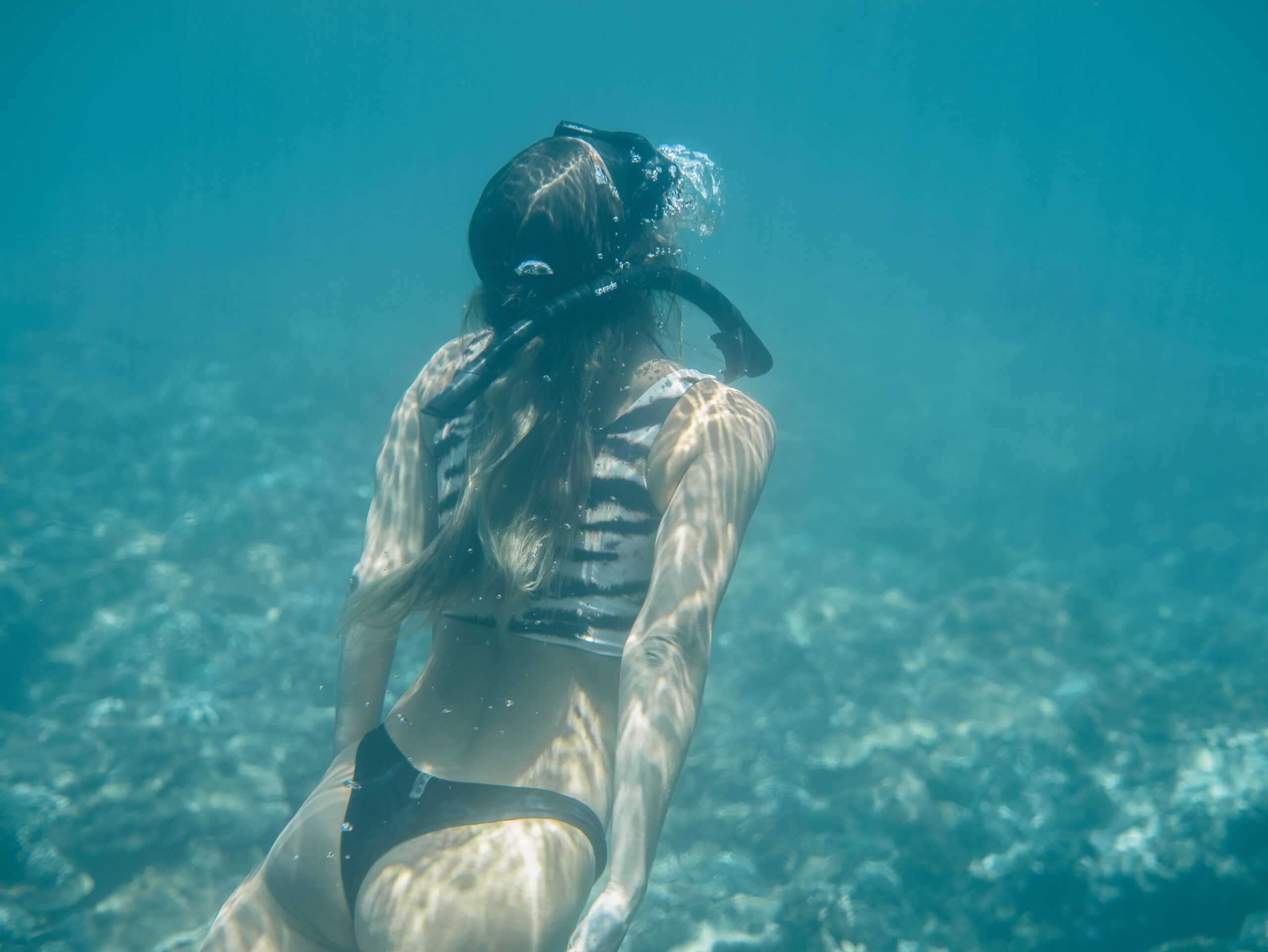
This is what people come for. The channel and reefs around the Nusas hold some of the clearest water in Bali, and a few things you won’t reliably find anywhere else.
Manta rays. Off the south coast, at Manta Bay and Manta Point, you can snorkel or dive with manta rays most of the year, one of the few places on earth with sightings this consistent. Filter feeders, wingspans of three or four metres, entirely uninterested in you. You float; they pass underneath. It doesn’t get old.
Mola mola. From roughly July to November, the oceanic sunfish rises from deep water to the cleaning stations around Crystal Bay. Enormous, strange, and a diver’s wave, not a snorkeller’s — cold thermoclines, deeper water, a guide who knows the site. Worth it if you dive.
The reefs. Twenty-odd dive sites around the Nusas — Crystal Bay, Toyapakeh, SD Point, Mangrove Point — drift dives over healthy coral with current that does the work for you. Snorkellers do well at Mangrove Point and off Mushroom Bay.
THE MANGROVES
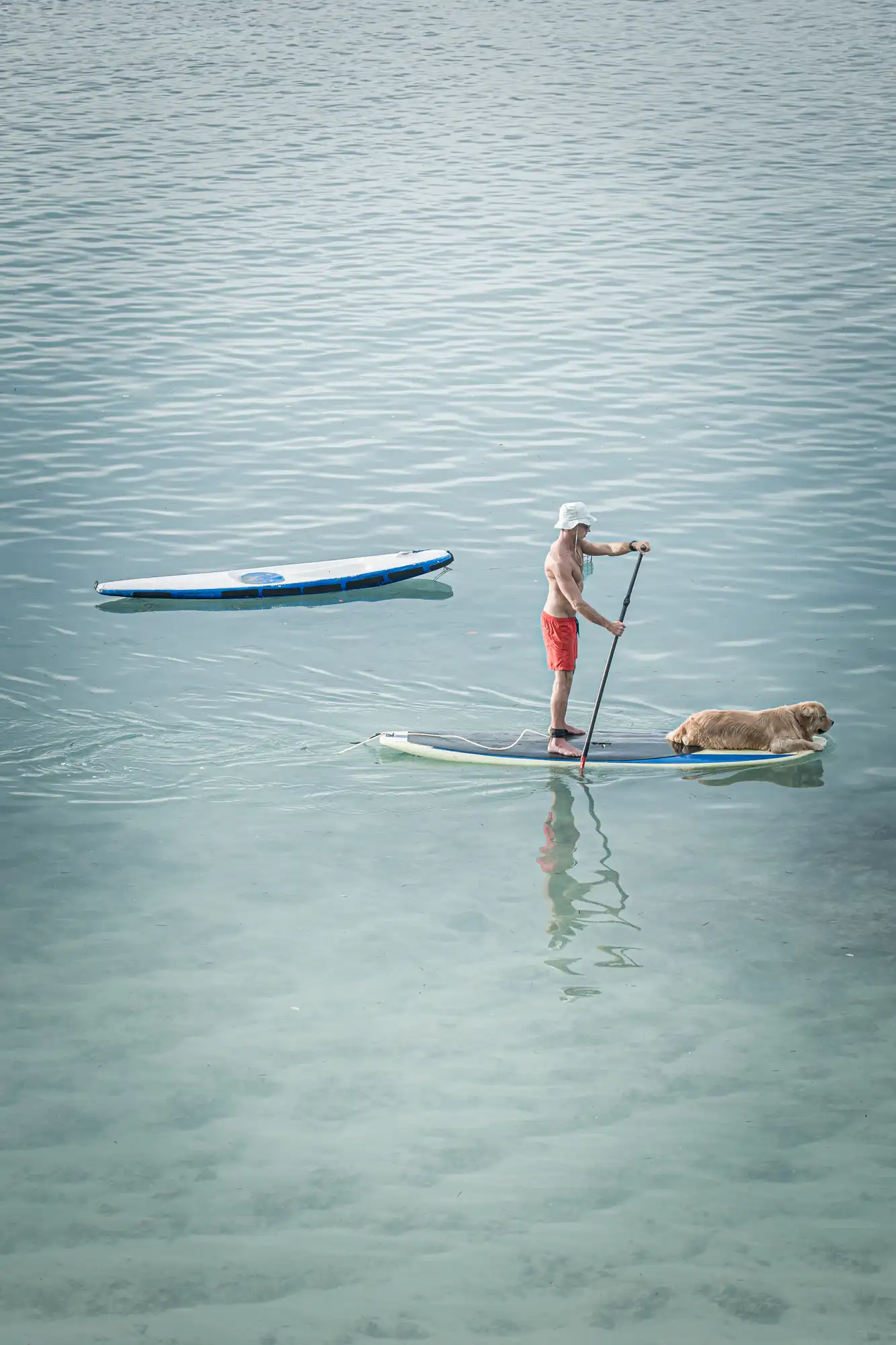
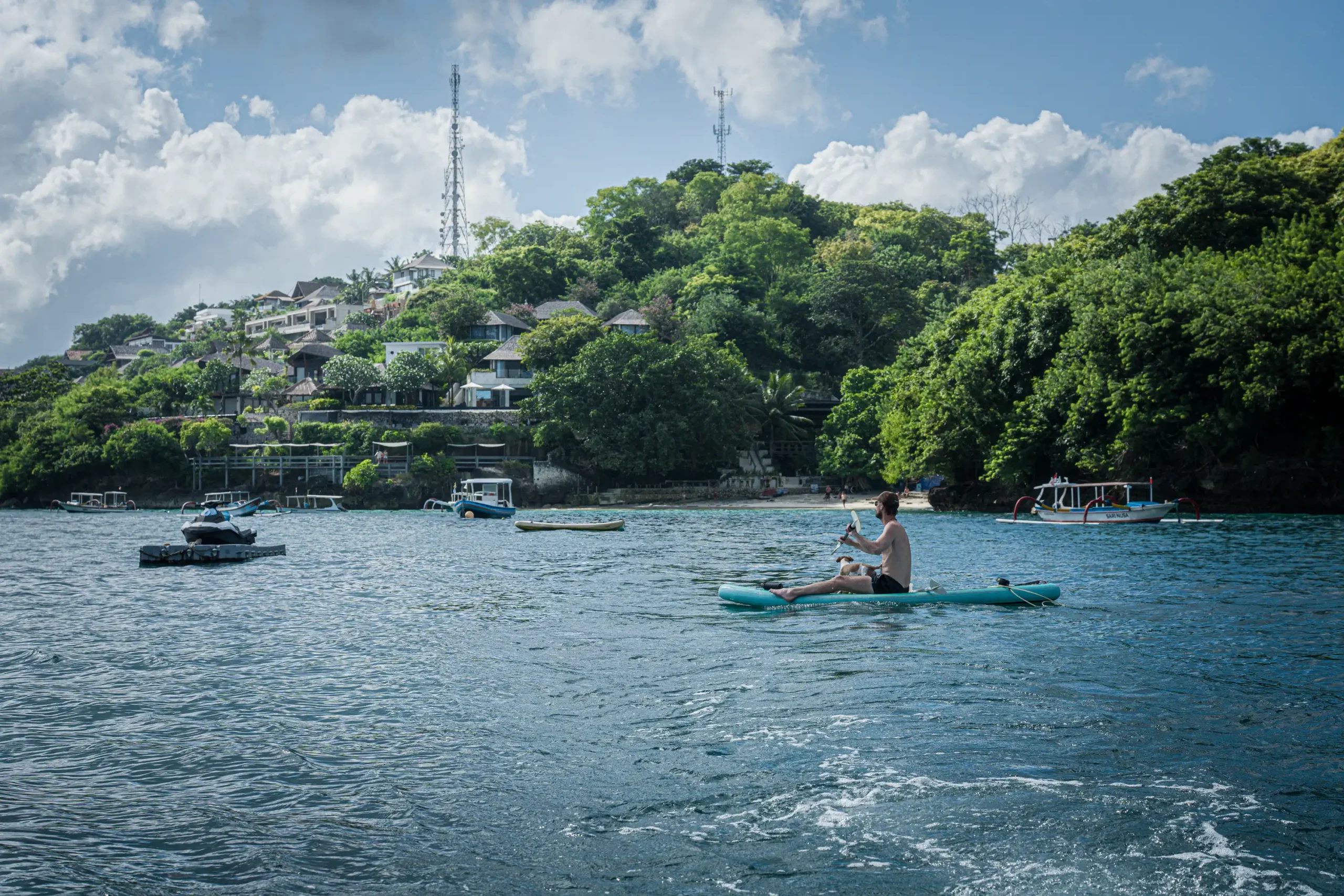
The northeast tip of Lembongan is wrapped in mangrove, one of the least-touched stands in Bali. Take a kayak or a paddleboard in at first light and go quiet. Kingfishers and herons in the branches, monitor lizards on the banks, the water flat and green and still. A local guide poles you through the channels if you’d rather watch than paddle. An hour, maybe two. The opposite of everything else on the island.
SURFING
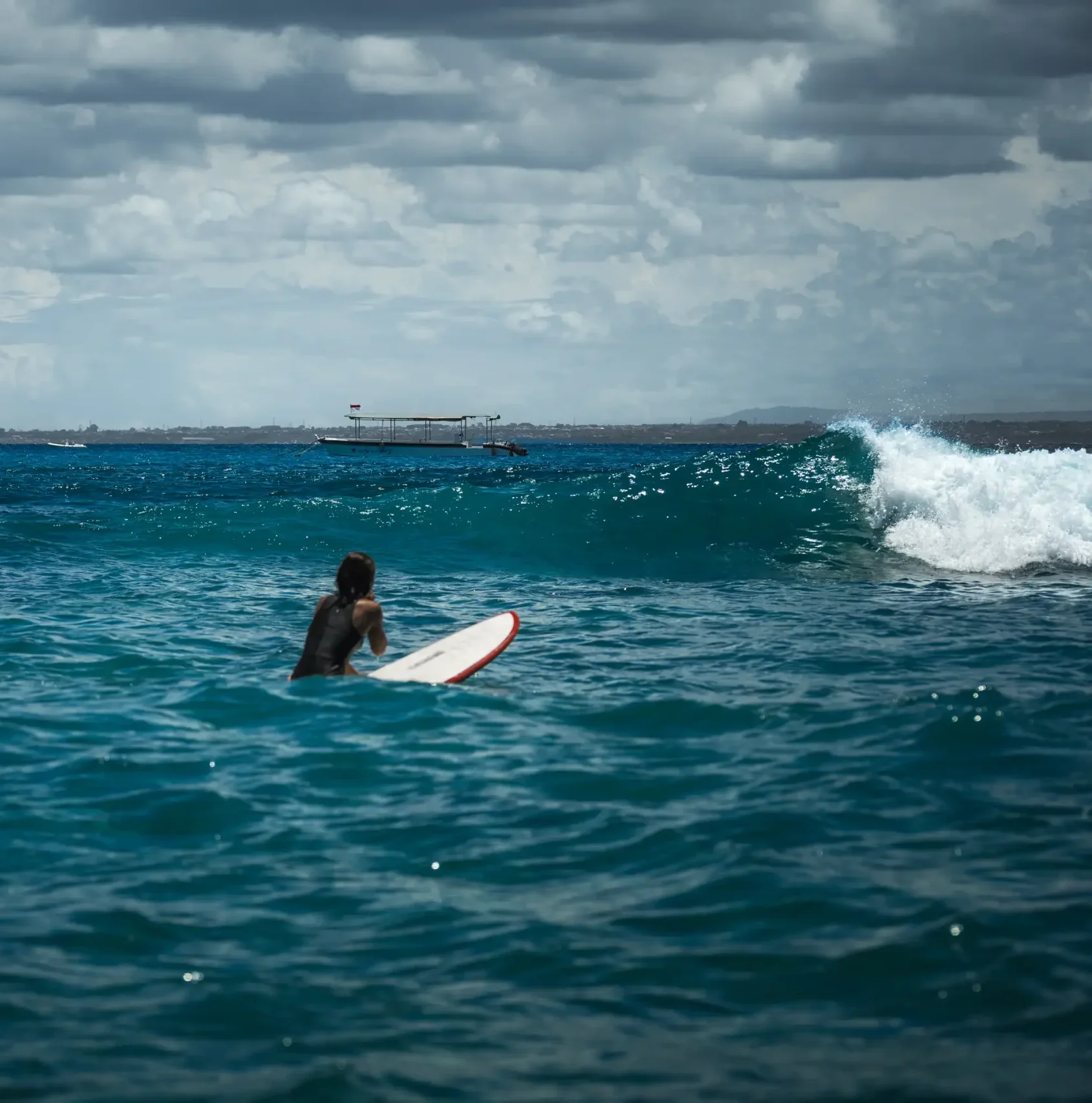
Three reef breaks in the channel off the south end — Shipwrecks, Lacerations, Playgrounds — all right-handers over coral, best in the dry season. There’s a full guide here. Short version: Playgrounds to learn, the other two if you already know what you’re doing.
THE COAST
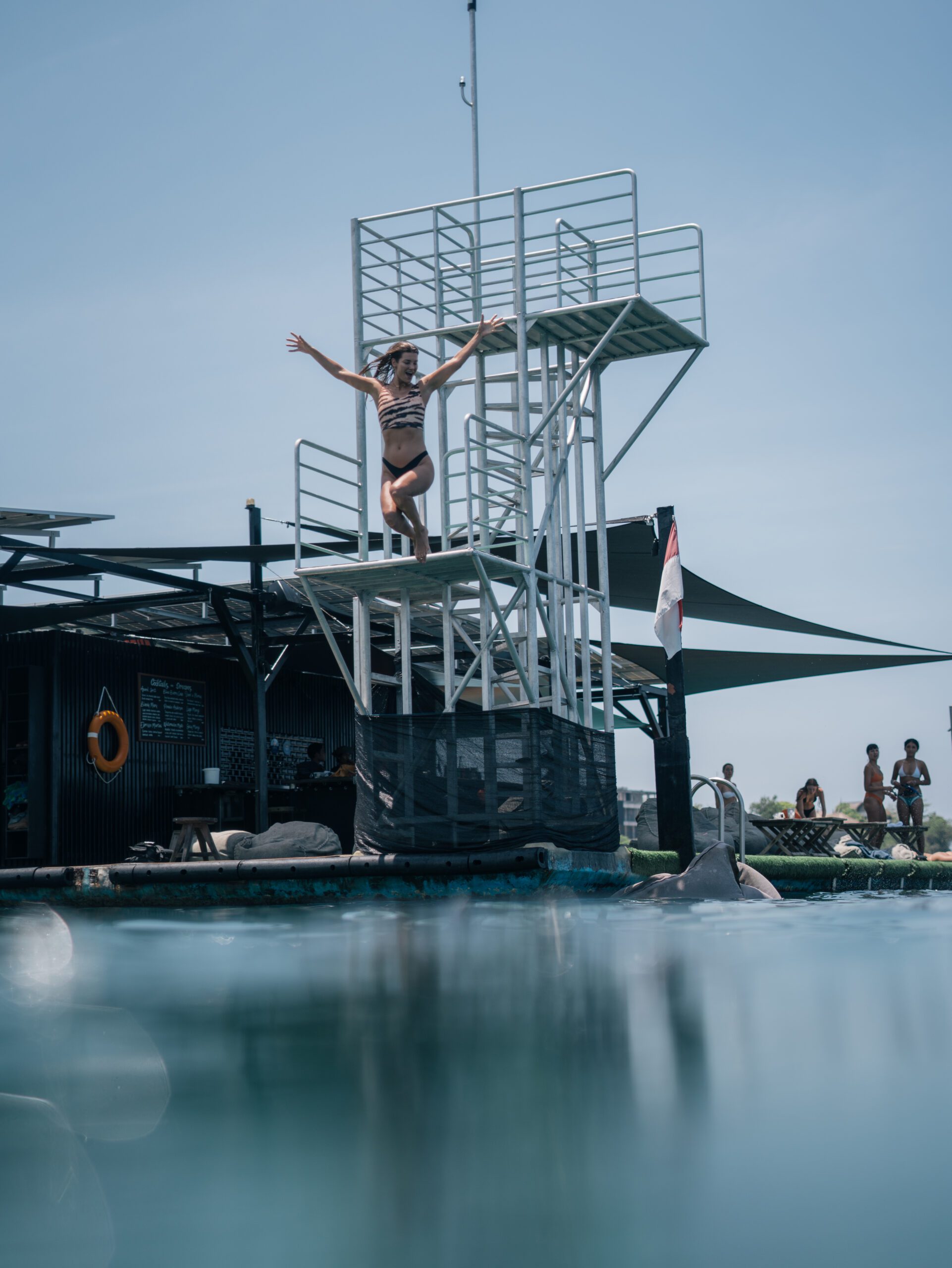
The Yellow Bridge — locals call it the Bridge of Love — is a thin span just wide enough for two scooters to think twice. Cross it and you’re on Ceningan: smaller, rougher, and home to the best cliff water on either island.The Blue Lagoon. A slot of vivid blue between sheer cliffs on the southeast coast. You look down at it from the edge and the colour is almost hard to believe. On a calm day people jump — platforms from four metres up to thirteen. Read the water first. The swell funnels into the lagoon and the exit is no joke; this is not the place to misjudge a set.
Mahana Point. The organised version, next door. A bar cut into the cliff, jumps at five and ten metres, and — the part that matters — a ladder in the water, so you’re not clawing back up the rock afterwards. Easier, safer, still a drop.
Secret Beach. Tucked under the cliffs on the southeast side. A small bay with coral across it, good snorkelling, few people, some shade. Worth the walk down.
Devil’s Tears. On the west side of Lembongan, a run of cliff where the swell hammers in and blows back up through the rock in sheets of spray. No swimming — just the noise, the water, and around six, one of the better sunsets on the island. A short walk from Dream Beach.
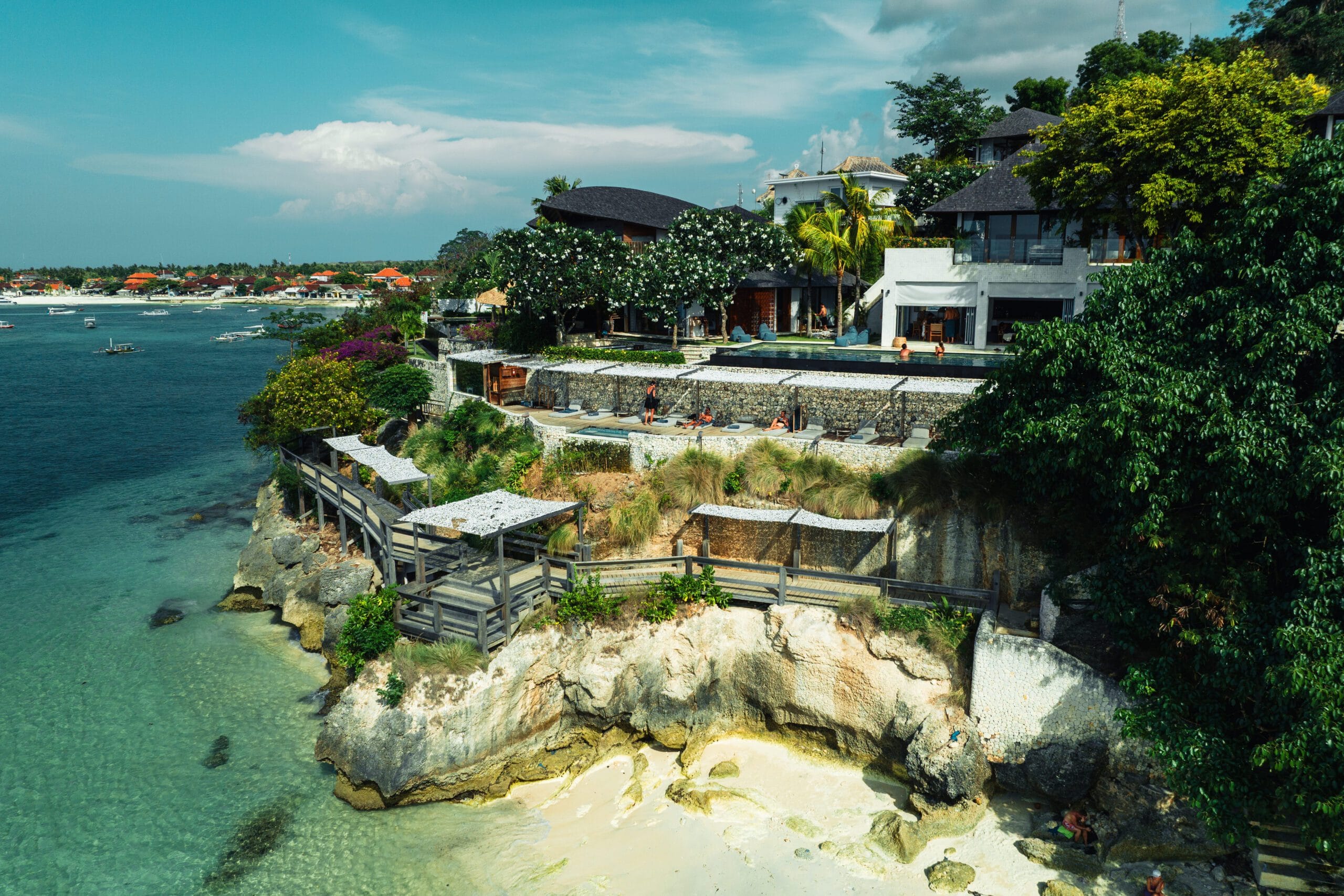
The beaches. Dream Beach for swell and swimming, Mushroom Bay for calm water and the snorkel boats, Sandy Bay for the afternoon. Song Lambung (Coconut Beach), below Lago, for the mornings before anyone’s up.